Pimsleur | Language Learning
- 4.1
- Rating
- 1.00M
- Installs
- Free
- Price

 Analysis by App-foxy
I came away from Pimsleur with a clear impression: this is an education app built for people who want to speak a foreign language more comfortably, not simply collect vocabulary cards. Its central appeal is the way it turns practice into a listening-and-speaking routine that can fit around ordinary life. I found it most useful when I treated it as a daily habit rather than a course to rush through.
That distinction matters. Many language apps feel rewarding because they give me quick taps, visible progress and short exercises. Pimsleur asks for a different kind of attention. I have to listen, remember, respond aloud and accept that improvement may feel less visible at first. In return, the practice feels closer to the mental work of holding a basic conversation. For learners who want confidence speaking, that is a meaningful advantage.
How the learning experience feels in everyday use
The app belongs to the education category and is developed by Simon & Schuster. It is free to install, with optional in-app purchases ranging from $0.49 to $399.99 per item. That pricing structure is important to understand before starting: downloading it costs nothing, but the full learning experience may involve paid content. I would begin by exploring the available material and deciding whether the lesson style suits me before committing to a larger purchase.
You May Also Like

 Blood Strike: 2.5 Anniversary
Blood Strike’s Loadouts Turn Every Drop Into a Tactical Gamble
A close look at Blood Strike’s custom loadouts: how fast access to signature weapons reshapes its battle royale rhythm, rewards preparation, and narrows the gap between fights.

 Pandora - Music & Podcasts
Pandora’s Music Is Easy to Start, but Harder to Recover
Pandora’s strength is its low-effort path from a seed to a station. Its weak spot is how much confidence it asks you to place in connection, setup, and quiet recovery.

 8 Ball Pool
 Is Built on Rivalries, Rematches, and Routine
A close look at the rivalries, rematches, shared routines, and unanswered safety questions that turn a quick pool match into a persistent mobile community.

 Samsung Music
’s Quiet Strength Is Playing What You Already Own
Its reach comes less from spectacle than from dependable access to a personal library. That simplicity is both the app’s strongest retention engine and its ceiling.

 AccuWeather: Weather Radar
AccuWeather Review: A Quick, Clear Forecast for Everyday Decisions
For everyday plans, the best forecast is the one you can understand quickly. AccuWeather makes rain timing, radar, and local conditions easy to act on, with a few trade-offs.

 Hill Climb Racing
Why Hill Climb Racing Still Turns Crashes Into One More Run
A tiny car, a bumpy hill and one more upgrade: Hill Climb Racing keeps resurfacing because its simple chaos makes every near-miss feel personal.
More From Our News Desk



The strongest part of the experience is its emphasis on active recall. Instead of only showing me a word and asking me to recognize it, the lesson style encourages me to retrieve language from memory and say it. That creates a little more pressure than a multiple-choice exercise, but it is also closer to what happens when somebody speaks to me in real life and I need to answer without a list of options in front of me.
I found this especially helpful for learners who understand more than they can say. That is a common frustration: reading practice may go well, while a simple spoken exchange still feels intimidating. Pimsleur directs attention toward the gap between recognition and response. It does not make that gap disappear immediately, but it gives me a practical way to work on it.
A useful routine is to schedule a lesson during a predictable part of the day, such as a commute, a walk or a quiet household task. I would not use it while driving if responding aloud could distract me, but the audio-centered format can be more flexible than an app that requires constant screen interaction. The real benefit comes from consistency. A short session repeated regularly is more valuable here than opening the app once a week for a long burst.
Why speaking aloud changes the practice
Speaking to a phone can feel awkward, particularly during the first few sessions. I had to get past the habit of silently answering in my head. That hesitation is not a flaw in the app; it is part of the challenge it exposes. If I only listen, I can mistake familiarity for ability. Saying the answer forces me to notice whether I can actually produce the phrase.
I recommend using a quiet place and answering at a natural volume. Whispering may make the exercise easier psychologically, but it can also hide pronunciation problems from me. A better approach is to repeat difficult phrases after the lesson and focus on rhythm rather than trying to sound perfect immediately. The goal is to become quicker and more comfortable, not to perform a polished speech on the first attempt.
Another practical tip is to avoid treating every pause as failure. Retrieval takes time when a phrase is new. I found it more productive to make a genuine attempt, listen carefully to the model, and then repeat it than to stop constantly and restart from the beginning. That keeps the lesson moving while still giving difficult expressions a second chance.
Where it fits beside familiar language apps
Compared with flashcard-heavy services, Pimsleur feels less focused on collecting isolated words. Flashcards are excellent when I need to memorize spelling, review a large vocabulary or control exactly which terms appear next. Pimsleur is stronger when my immediate goal is to respond in a spoken exchange. I would use flashcards as a companion for reading and vocabulary breadth, not as a direct replacement for this kind of speaking practice.
It also differs from grammar-first courses. A traditional textbook can explain sentence structure clearly and let me study rules at my own pace. That is valuable for learners who enjoy understanding why a sentence works. Pimsleur is more experiential: I encounter patterns through repeated listening and response. The trade-off is that I may begin using a useful construction before I can explain its grammar in detail.
Compared with free video lessons, the app offers a more deliberate path. Videos can provide cultural context, different accents and visual explanations, but they are easy to watch passively. Pimsleur keeps bringing me back to the question of what I can produce. I still think outside material is useful, especially for seeing natural writing and hearing a wider range of speakers, but the app gives the practice a clearer daily shape.
Its average rating is 4.2 from around 15 thousand ratings, and the app has passed one million installs. Those figures suggest that the approach has reached a substantial audience, but they should not be treated as a guarantee that every learner will enjoy it. Audio-led repetition is naturally appealing to some people and frustrating to others. I would pay more attention to my own preferred learning style than to the rating alone.
The less comfortable side of the method
The main weakness is that the experience can feel repetitive if I want constant visual variety. Learners who depend on games, colorful challenges or frequent changes of activity may find the steady listen-and-answer rhythm plain. That simplicity is part of the method, but it can make motivation harder when I am tired or when I want a quick, entertaining session.
I also would not choose it as my only resource if my priority is writing. Speaking practice does not automatically teach me to spell, read unfamiliar text or compose messages. Someone preparing for a written exam, studying formal grammar or trying to read literature will need additional material. Pimsleur can support those goals by improving familiarity with the language, but it should not be expected to cover every skill equally.
The purchase model deserves attention as well. The app is free, yet the optional items can range from a very small amount to a much larger purchase. I would review the exact offer shown in the app before paying and avoid assuming that installation includes every course or lesson. This is not a reason to reject it, but it is a reason to make the buying decision deliberately rather than tapping through quickly.
There is also a motivational trade-off. Because the work is based on recall and speaking, progress may not always feel as immediately satisfying as completing a visual quiz. I sometimes wanted a clearer sense of achievement after a difficult session. The answer is to measure progress differently: notice whether I can answer with less hesitation, remember a phrase the next day or follow a familiar exchange more comfortably.
Small workflow changes that make it more useful
I get better results when I keep a short personal note after practice. I write down only the phrases that repeatedly slow me down, then revisit them later without turning the exercise into a second full lesson. This creates a targeted review loop. It also prevents me from copying every unfamiliar word and building a notebook too large to use.
Another effective workflow is to separate listening practice from pronunciation checking. During the main session, I focus on understanding and responding without interrupting the rhythm. Later, I replay a troublesome phrase and concentrate on its sounds and pacing. Constantly pausing can make the lesson feel fragmented, while a short follow-up review gives me room to examine details.
I would also connect the app to a real-life purpose. Before a trip, I might choose a few situations I expect to face, such as greeting someone, ordering food or asking for help, and pay attention to how quickly I can retrieve the relevant expressions. For a learner studying for personal interest, the same idea works with a weekly theme. The practice becomes easier to sustain when I know where I might use it.
A realistic scenario would be a person with a full workday who has twenty quiet minutes in the evening. Rather than opening a social media feed, that person can complete a listening-and-speaking session, answer aloud and then mark two phrases for later review. The next day, the same phrases can be tested informally during a walk. This is not a dramatic transformation, but it is a workable routine that turns spare time into repeated contact with the language.
Who should choose it, and who should look elsewhere
I would recommend Pimsleur to a beginner or returning learner whose main concern is speaking with less hesitation. It is also a good match for people who dislike staring at a screen for every minute of study, commuters who can safely listen and respond, and learners who prefer a guided sequence over assembling resources themselves. The Everyone age rating makes it broadly accessible, although a younger learner may still benefit from an adult helping choose an appropriate study routine.
It is less suitable for somebody who wants a heavily visual, game-like experience or who needs detailed written explanations at every step. I would also steer a serious writing student toward a broader combination of resources. A textbook, reading practice or a dedicated vocabulary system may be the better first choice when spelling, grammar analysis or written production is the central goal.
The app runs on Android with a minimum operating system requirement of 7.0. Its current version is 7.3, so I would check that an older device meets the requirement before trying to install it. That is a small practical detail, but it can save time for anyone using an older phone or tablet as a dedicated study device.
One question many new users have is whether they need to be naturally confident before speaking into the app. In my view, no. The practice is most valuable precisely because it gives me a private place to make imperfect attempts. I would still expect an adjustment period, especially if I am accustomed to selecting answers silently. The discomfort usually becomes more manageable once speaking aloud is treated as the exercise rather than an embarrassing extra.
Another question is whether it can replace conversation with another person. I would not make that claim. It can prepare me to retrieve phrases and listen more actively, but real conversation adds interruptions, unexpected wording, different voices and social pressure. I see Pimsleur as preparation and structured practice, not a complete substitute for using the language with people.
It is also worth asking whether a free installation means the app is entirely free. It does not. The app itself can be downloaded without a charge, while optional purchases are available inside it. I would explore the learning approach first, then compare the cost of the content I actually want with alternatives such as books, classes or other apps. The right value depends on how consistently I will use it.
My final assessment
After spending time with it, I think Pimsleur succeeds because it takes speaking seriously. It does not rely entirely on recognition or make a learner feel fluent simply for completing a sequence of taps. Instead, it asks me to retrieve language, listen closely and say something before I feel completely ready. That can be demanding, but it is also the reason the practice feels relevant to real conversations.
The app is not a universal language course. It will not be my first recommendation for someone whose priority is writing, visual games, extensive grammar notes or broad reading practice. Its paid content also means I should examine the purchase options carefully. Still, for a learner who wants a structured way to build spoken confidence and can commit to regular audio practice, those limitations are reasonable trade-offs.
My recommendation is simple: choose it when your biggest problem is getting words out loud, not when your only goal is memorizing more words. Used consistently, with a small amount of reading and real conversation alongside it, Pimsleur can become a practical foundation for everyday speaking. That focused purpose is narrower than some alternatives, but in my experience it is also what gives the app its strongest identity.
FAQs for Pimsleur | Language Learning
01What languages can I learn with Pimsleur?
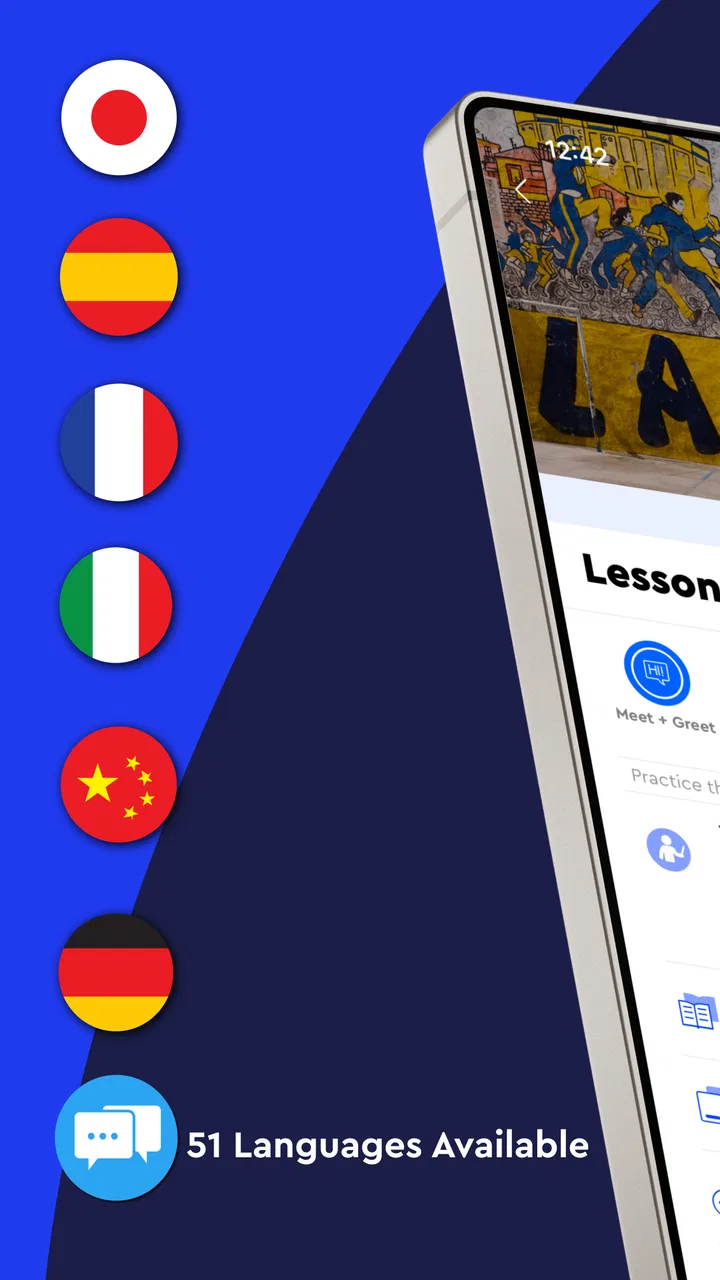
Pimsleur offers a wide range of languages, including popular ones like Spanish, French, and Mandarin, as well as less common languages such as Icelandic and Swahili. The app is designed to cater to both beginners and advanced learners, providing a comprehensive selection that suits various learning goals.
02How effective is the Pimsleur method for language learning?
The Pimsleur method is highly regarded for its audio-focused approach, emphasizing listening and speaking skills. It uses a graduated interval recall technique, which helps improve memory retention. Many users find this method effective for gaining conversational skills quickly, though it may not cover reading and writing as extensively.
03Is Pimsleur suitable for beginners?
Yes, Pimsleur is designed to accommodate beginners by starting with foundational vocabulary and phrases. The lessons progressively increase in difficulty, allowing users to build their skills gradually. However, if you’re looking for intensive grammar instruction, you might need supplementary resources.
04What devices are compatible with Pimsleur?
Pimsleur is compatible with both Android and iOS devices, ensuring a seamless experience across smartphones and tablets. Additionally, users can access courses on desktop computers via the Pimsleur website, providing flexibility to learn anytime and anywhere.
05Does Pimsleur require an internet connection?
While an internet connection is needed to download lessons initially, Pimsleur allows offline access to your downloaded content. This feature is particularly useful for users who wish to learn on the go without relying on continuous internet connectivity.
Pros
- Audio-based learning enhances pronunciation.
- Offline access for learning on the go.
- Wide variety of languages available.
- User-friendly interface for easy navigation.
- Structured lessons improve retention.
Cons
- Limited visual learning resources.
- Subscription can be expensive for some.
- No written exercises for practice.
- Progress tracking is basic.
- Lacks interactive speaking features.

Pimsleur | Language Learning
Gallery